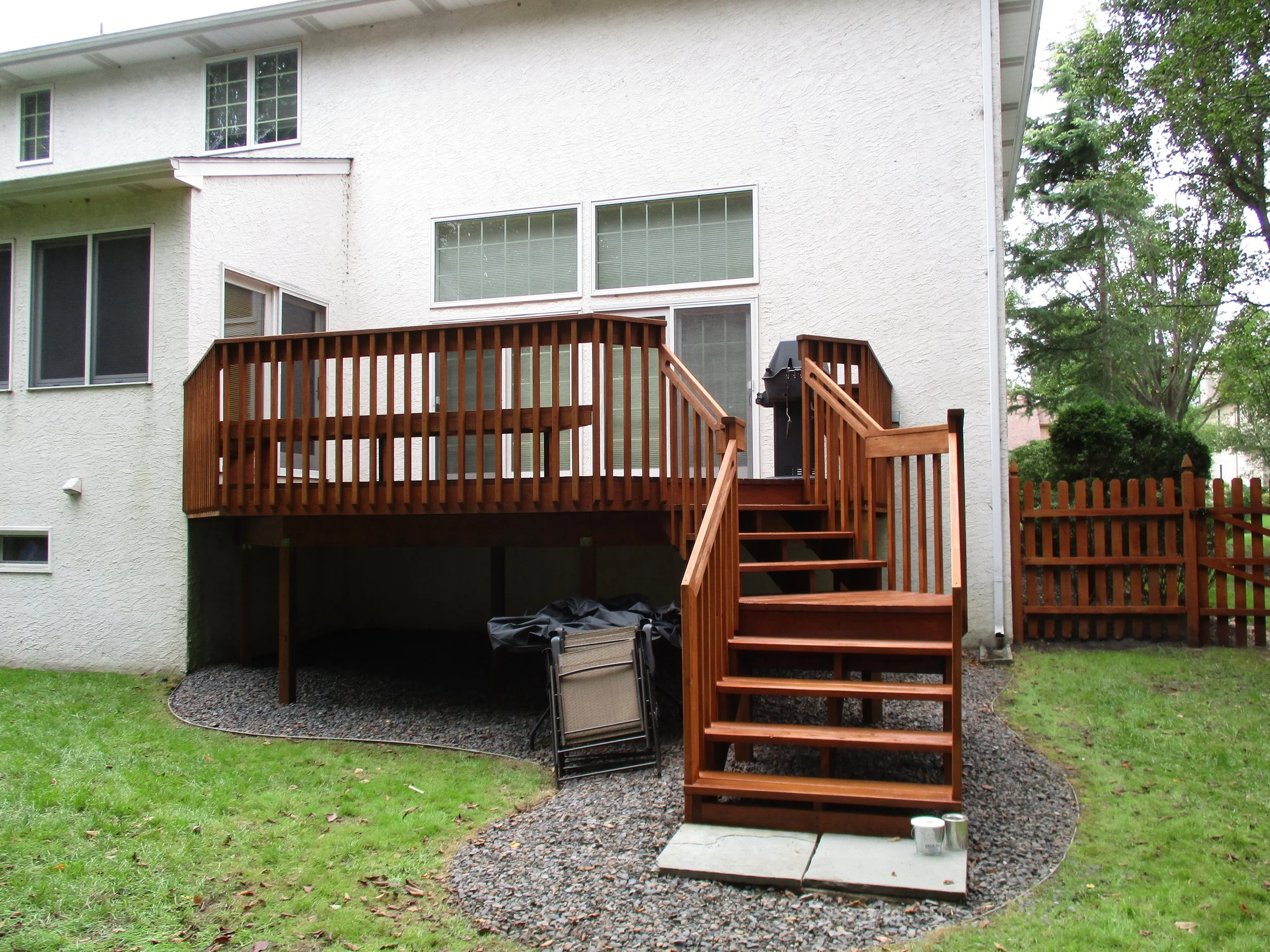
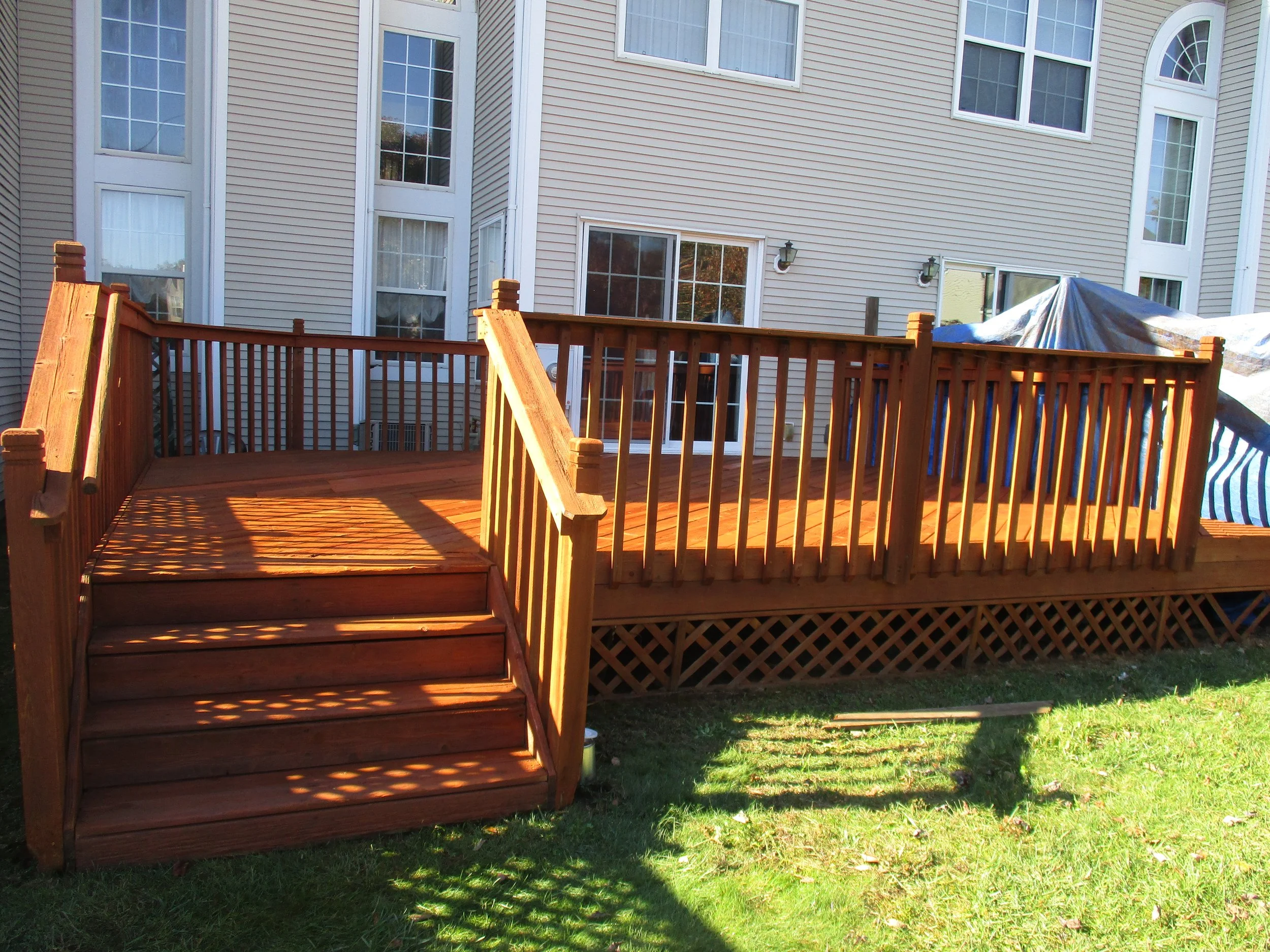
Signs Your Deck Needs Professional Restoration
A deck does not usually fail all at once. Most of the time, it gives homeowners warning signs long before serious damage sets in. The problem is that those signs are easy to overlook, especially if the deck still feels usable.
Maybe the color has faded. Maybe the stain is peeling in a few spots. Maybe the boards feel rough under your feet. At first, these issues may seem cosmetic. But on a wood deck, surface damage is often a sign that the protective coating is wearing down and the wood is becoming more exposed to moisture, sun, and seasonal weather.
For homeowners in Burlington County and South Jersey, catching these signs early can make a major difference. A deck that looks worn may still be a good candidate for restoration. Waiting too long can lead to deeper damage, more repairs, and in some cases, full replacement.
Your Deck Has Turned Gray or Dull
One of the most common signs that a deck needs attention is gray, faded wood. This usually happens when sunlight and moisture break down the surface of the wood over time.
A gray deck does not automatically mean the structure is unsafe. In many cases, it means the surface has lost its protection. The stain or sealer may no longer be doing its job, leaving the wood exposed to the elements.
Professional deck restoration can often remove the weathered surface layer, clean the wood, and prepare it for a fresh protective finish.
The Stain Is Peeling or Flaking
Peeling stain is another clear warning sign. When stain starts lifting from the deck boards, moisture can get underneath the coating. Once that happens, the finish may continue to fail across larger areas of the deck.
Peeling can happen for several reasons. The previous stain may have been applied over dirty wood. The deck may not have been dry enough before staining. The old coating may not have been removed properly. Or the finish may simply be past its useful life.
Applying new stain directly over peeling stain is not a long-term fix. The loose coating needs to be removed and the surface needs to be properly prepared before a new finish is applied.
Water Soaks Into the Wood
A simple way to check the condition of your deck is to watch what happens after it rains. If water beads on the surface, the deck may still have some protection. If water soaks into the wood quickly, the finish is likely worn down.
When wood absorbs water regularly, it becomes more vulnerable to swelling, cracking, mildew, and rot. This is especially important in South Jersey, where humidity and frequent rainfall can keep outdoor wood damp for long periods.
If your deck absorbs water instead of repelling it, restoration should be considered before the damage gets worse.
The Surface Feels Rough or Splintered
A deck should feel comfortable enough to walk on. If the boards feel rough, raised, cracked, or splintered, the surface has likely been worn down by sun and weather.
Splintering is more than a cosmetic issue. It can make the deck uncomfortable or unsafe for bare feet, pets, and children. It can also indicate that the wood fibers are drying out and breaking apart.
Depending on the condition of the boards, sanding and refinishing may help smooth the surface and restore protection.
You See Mold, Mildew, or Algae
Dark stains, green patches, and slippery areas are often caused by mildew, algae, or organic buildup. These problems are common on decks that are shaded, surrounded by trees, or exposed to regular moisture.
Mildew and algae can make a deck look neglected, but they can also create safety concerns. A slippery deck surface can become dangerous after rain or morning dew.
Professional cleaning and restoration can remove buildup and help prepare the deck for a new protective coating.
The Deck Looks Patchy or Uneven
If some areas of your deck are darker, lighter, shinier, or more worn than others, the finish may be failing unevenly. This often happens when certain sections receive more sunlight, foot traffic, or moisture exposure.
Patchy color can also occur when old stain has worn away in high-use areas but remains in protected spots.
A professional restoration process helps create a more consistent surface before the new finish is applied.
Boards Are Starting to Crack or Cup
Cracking, cupping, or warping can happen when deck boards repeatedly absorb and release moisture. Over time, this movement can change the shape of the wood and create gaps, raised edges, or uneven surfaces.
Minor cracking may be manageable through restoration. More severe board damage may require repair or replacement before staining.
This is why it is important to have the deck evaluated before assuming it only needs a quick coat of stain.
The Deck Looks Older Than the Home
Sometimes the clearest sign is visual. If the deck makes the entire backyard look tired, it may be time for restoration.
A worn deck can affect the appearance of the whole outdoor space. This matters if you entertain often, plan to spend more time outside, or are thinking about selling your home. A clean, freshly restored deck can make the backyard feel more finished and better maintained.
Restoration Can Help Protect Your Investment
A deck is a significant part of your home’s outdoor living space. Letting the finish fail year after year can shorten its lifespan and lead to more expensive repairs.
Professional deck restoration helps protect the wood, improve the appearance of the deck, and reduce the risk of continued weather damage.
For many homeowners, restoration is a practical middle ground between ignoring the problem and paying for a full replacement.
Schedule a Deck Restoration Estimate
If your deck is gray, peeling, splintering, slippery, or absorbing water, it may be time to have it professionally restored.
Deck Restoration Plus provides deck restoration, cleaning, sanding, staining, and repair services for homeowners in Burlington County and surrounding South Jersey areas.
Contact Deck Restoration Plus to schedule an estimate and find out whether your deck can be restored before the damage gets worse.