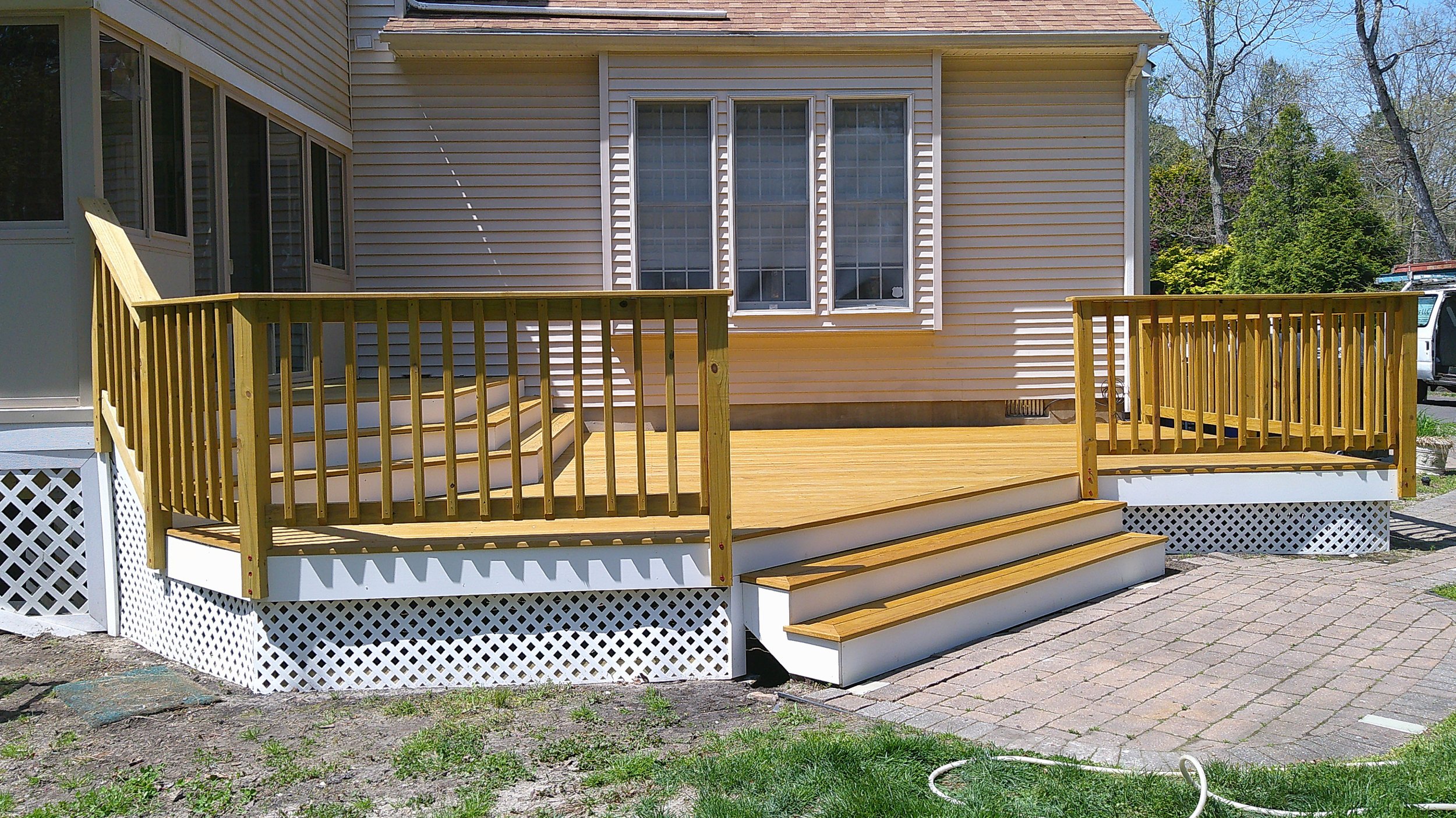
How Often Should You Stain Your Deck?
A wood deck needs protection to stay in good condition. Without it, sun, rain, humidity, leaves, foot traffic, and seasonal weather can wear down the surface and leave the wood vulnerable to damage.
One of the most common questions homeowners ask is how often a deck should be stained. The answer depends on the condition of the deck, the type of stain used, the amount of sun and moisture it receives, and how well the surface was prepared before the last application.
For homeowners in Burlington County and South Jersey, deck staining is not something to ignore for years at a time. Local weather can be hard on outdoor wood, and once the protective finish starts to fail, the deck can deteriorate faster.
Most Decks Need Staining Every Few Years
As a general rule, many wood decks need to be stained every two to three years. Some decks may need attention sooner, while others may last longer between staining.
The timeline depends heavily on exposure.
A deck that gets full afternoon sun, heavy foot traffic, and regular moisture may need staining more often. A covered or lightly used deck may hold its finish longer.
The important thing is not to rely only on the calendar. A deck should be evaluated based on how it looks and how well it repels water.
South Jersey Weather Can Wear Down Deck Stain
Decks in South Jersey deal with a wide range of conditions throughout the year. Hot summer sun dries out the wood. Humidity and rain add moisture. Leaves and pollen collect on the surface. Winter weather can cause expansion, contraction, and additional wear.
These conditions can break down stain and sealer over time.
Once the protective coating starts to wear away, the wood becomes more exposed. That can lead to fading, graying, cracking, mildew growth, and water absorption.
This is why regular maintenance is so important. Staining your deck at the right time can help prevent larger problems later.
The Type of Stain Matters
Different stains perform differently.
Transparent and semi-transparent stains allow more of the wood grain to show, but they may need more frequent maintenance depending on exposure. Semi-solid and solid stains provide more coverage and may create a more uniform appearance, especially on older or weathered decks.
The best option depends on the age of the deck, the type of wood, previous coatings, current condition, and desired look.
A newer deck may look best with a finish that highlights the natural grain. An older deck with uneven color or previous staining may benefit from a product with more coverage.
Choosing the right stain is part of making the finish last as long as possible.
Prep Work Affects How Long the Stain Lasts
Even the best stain will not perform well if the deck is not prepared correctly.
Before staining, the wood needs to be clean, dry, and ready to accept the finish. Dirt, mildew, old failing stain, and trapped moisture can all prevent proper bonding or absorption.
If stain is applied over a dirty or peeling surface, it may fail early. That can lead to blotching, peeling, uneven color, or poor protection.
Professional preparation may include cleaning, sanding, stripping failing coatings, making repairs, and allowing the deck to dry properly before application.
This prep work is one of the biggest differences between a quick stain job and a proper deck restoration.
Signs It Is Time to Stain Your Deck Again
Your deck may need staining if the wood has turned gray, the color has faded, or the surface looks dry and dull.
Peeling, flaking, or patchy stain is another sign that the finish is failing. If water soaks into the boards instead of beading on the surface, the deck may no longer be protected.
You should also look for rough areas, splintering, mildew, algae, dark staining, or boards that feel overly dry.
These signs usually mean the deck needs more than a simple rinse. It may need professional cleaning, sanding, and restoration before a new stain is applied.
Do Not Wait Until the Deck Looks Severely Damaged
Many homeowners wait until their deck looks very worn before scheduling maintenance. By that point, the wood may already be absorbing moisture and breaking down at the surface.
It is better to stain or restore the deck before the finish has completely failed.
Regular maintenance helps protect the wood and can reduce the risk of expensive repairs later. It can also keep the deck looking cleaner and more inviting throughout the outdoor season.
A deck that is maintained every few years is usually easier to restore than one that has been neglected for a long time.
Spring and Early Summer Are Popular Times for Deck Staining
Spring and early summer are common times to schedule deck staining in Burlington County and South Jersey. Homeowners are getting ready to use their outdoor spaces, and the weather is often suitable for cleaning, drying, and staining.
However, this is also when schedules can fill quickly.
If your deck needs attention before summer gatherings, it is smart to have it inspected earlier in the season. That gives time for cleaning, repairs, sanding, staining, and weather-related scheduling.
Fall can also be a good time for deck maintenance, especially if you want to protect the wood before winter moisture arrives.
Can You Stain a Deck Too Often?
Staining too often without proper preparation can create problems.
If new stain is repeatedly applied over old coatings, the surface can become uneven, sticky, blotchy, or prone to peeling. This is especially true if the previous finish is still sitting on top of the wood or has started to fail.
The goal is not simply to add more stain. The goal is to apply the right finish to properly prepared wood.
That is why a professional evaluation is helpful. Sometimes the deck needs a maintenance coat. Other times, it needs stripping, sanding, or deeper restoration before staining.
Professional Deck Staining Helps Protect Your Investment
A deck is exposed to weather all year. Staining helps protect that investment by reducing moisture absorption, improving appearance, and slowing surface deterioration.
For homeowners in South Jersey, professional deck staining can be especially valuable because local decks face humidity, sun, rain, organic debris, and winter conditions.
When the deck is properly cleaned, prepared, and finished, it has a better chance of holding up through the seasons.
Schedule Deck Staining With Deck Restoration Plus
If your deck is faded, gray, peeling, rough, or no longer repelling water, it may be time to stain or restore it.
Deck Restoration Plus provides deck cleaning, sanding, staining, repairs, and full deck restoration services for homeowners throughout Burlington County and surrounding South Jersey areas.
Contact Deck Restoration Plus to schedule an estimate and find out whether your deck is ready for professional staining.