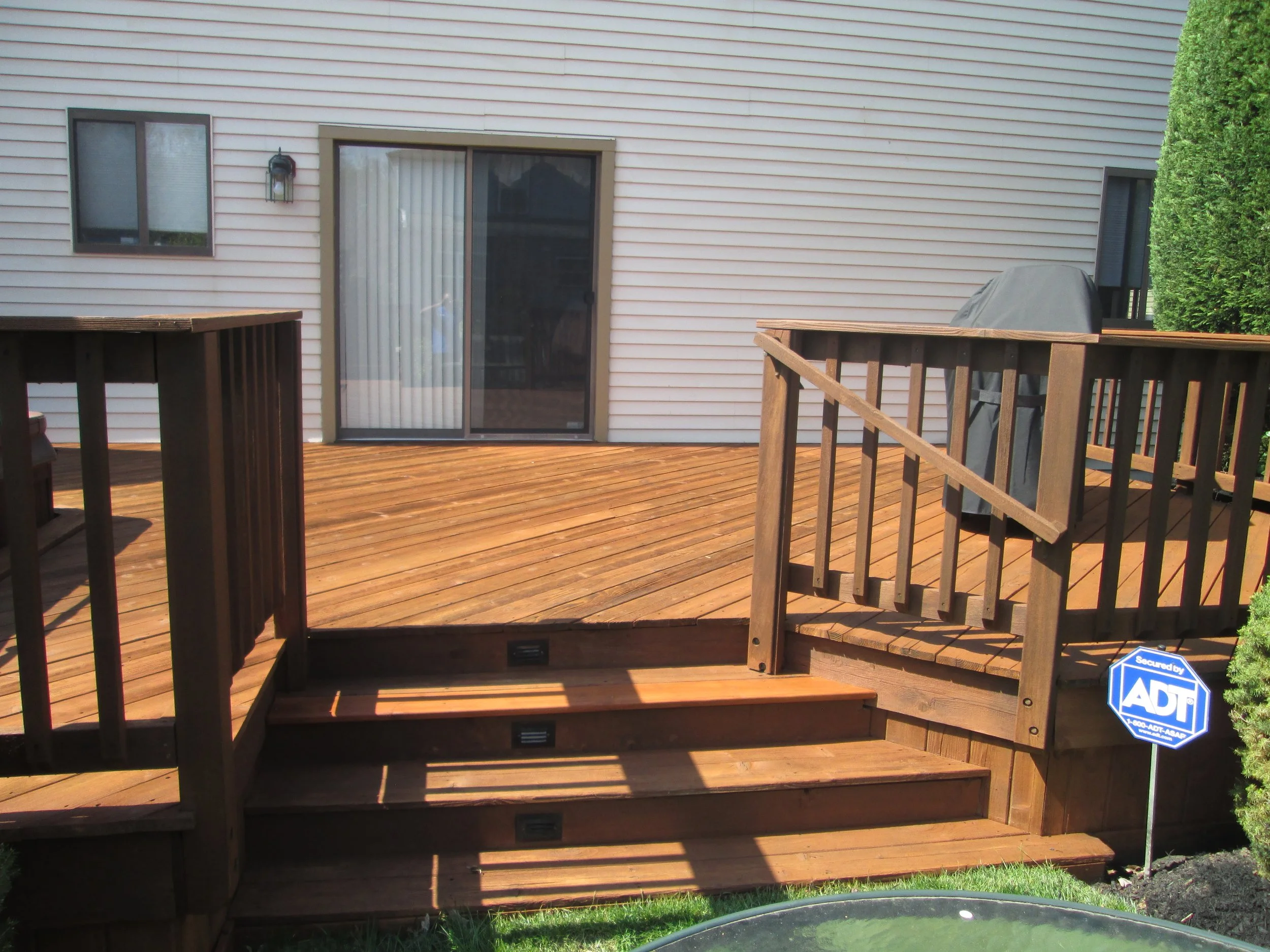
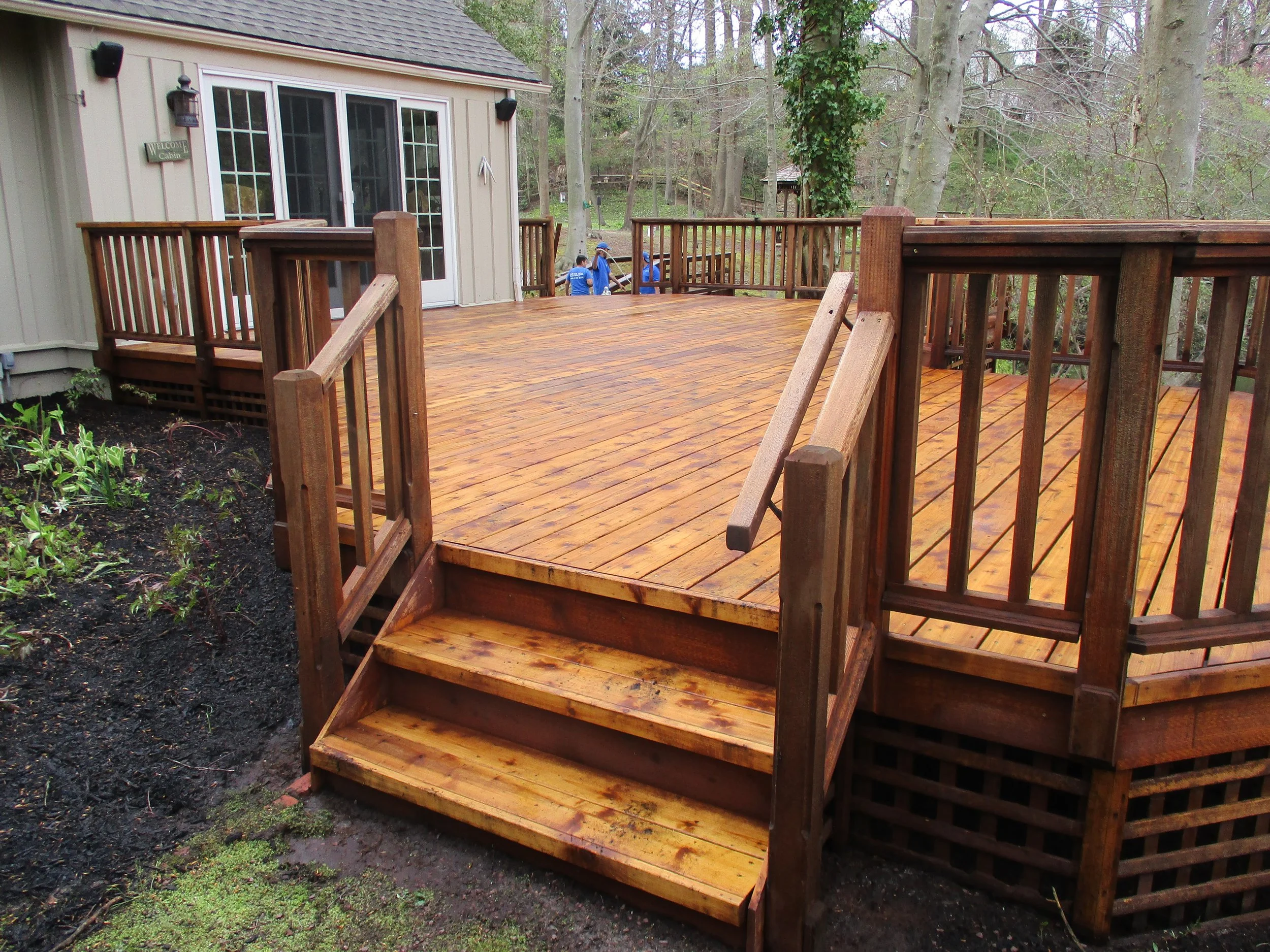
How Weather in South Jersey Affects Your Deck Over Time
Decks in South Jersey don’t fail all at once.
They wear down gradually—season by season—until the damage becomes visible.
Most homeowners don’t notice it happening.
Then one day, the deck looks completely different than it did a year ago.
That change isn’t random. It’s the result of how local weather consistently affects the wood over time.
The Year-Round Impact Most People Don’t Think About
In Burlington County and surrounding areas, decks go through a full cycle of environmental stress every year.
Winter brings moisture, freezing temperatures, and expansion within the wood.
Spring adds more moisture, along with organic buildup like mildew and algae.
Summer introduces strong UV exposure and heat, which break down the surface.
Fall continues the cycle with damp conditions and debris buildup.
Each season does something different—but they all move the deck in the same direction: deterioration.
What Winter Really Does to Your Deck
Winter is where a lot of the damage begins.
Moisture gets absorbed into the wood, then freezes and expands. That expansion creates small cracks and weakens the structure at the surface level.
Even if the deck looks fine when the snow melts, the internal stress is already there.
By the time spring arrives, the wood is more vulnerable than it appears.
Spring: When Damage Becomes Visible
As temperatures rise, everything that built up over winter starts to show.
You might notice:
darker areas in corners or between boards
early signs of mildew or algae
fading or uneven color
This is also when many homeowners start searching for:
deck restoration near me
deck staining services in Burlington County
deck refinishing South Jersey
They’re reacting to what they see—but the process started months earlier.
Summer Sun Breaks Down Unprotected Wood
UV exposure is one of the fastest ways a deck deteriorates.
When stain wears off, the wood is left exposed to direct sunlight.
Over time, UV rays break down the surface fibers, leading to:
graying
rough texture
weakened wood structure
This is why decks that aren’t maintained can go from “slightly faded” to “completely worn” within a single season.
Why South Jersey Conditions Accelerate the Process
The combination of humidity, temperature swings, and seasonal moisture makes this region particularly tough on decks.
It’s not just one factor—it’s the constant shift between them.
Wet conditions followed by heat.
Cold followed by rapid warming.
Sun exposure on already stressed wood.
That cycle speeds up wear compared to more stable climates.
What Happens If Nothing Is Done
Decks don’t stabilize on their own.
Once the protective layer is gone, the rate of damage increases.
Moisture continues to penetrate deeper.
Surface breakdown becomes structural over time.
What started as discoloration can lead to cracking, splintering, and eventual board replacement.
This is where simple restoration turns into more involved repair.
Why Timing Matters More Than Most People Think
The best time to restore a deck isn’t when it looks the worst—it’s before it gets there.
Addressing weather-related wear early allows for:
less intensive prep
better stain performance
longer-lasting protection
Waiting usually means more work, more cost, and less predictable results.
The Bottom Line
Weather in South Jersey isn’t just something your deck deals with occasionally—it’s something it’s constantly responding to.
Every season adds stress. Every delay allows that stress to build.
Restoration isn’t just about improving how the deck looks.
It’s about protecting it from the conditions that are actively breaking it down.
For homeowners in Burlington County, Shamong, and surrounding South Jersey areas, staying ahead of that cycle is what keeps a deck in good condition long-term.
If your deck is already showing signs of wear from weather exposure, now is the time to take care of it before the damage gets worse. Contact Deck Restoration Plus today to schedule your deck restoration in Burlington County and protect your deck before another season takes its toll.